I was in the middle of a midnight kitchen raid, eyes bleary from a week of burnt toast and overcooked rice, when the universe threw a carrot at me like a rogue fruit. I was staring at it, wondering if it could save my dinner, when a whisper of miso paste floated in the air, almost like a secret invitation. I laughed, a little hysterical, because I’d been chasing the holy grail of comfort soup for months, and this moment felt like a cosmic nod. The idea that a humble carrot, a splash of sriracha, and a dollop of miso could transform my kitchen chaos into a velvety, spicy hug was the kind of culinary epiphany that makes you want to shout from the rooftops.
Picture the scene: a sizzling pan, the aroma of caramelized onions drifting through the air, the subtle pop of garlic as it hits the oil, and the gentle steam that rises from the simmering carrots. The kitchen lights cast a golden glow on the bubbling broth, while the faint hum of the fridge adds a comforting background score. I could almost taste the sweet earthiness of the carrots, the umami depth of miso, and the fiery kiss of sriracha dancing on my tongue. The texture feels like a silky blanket, thickened by coconut milk, yet brightened by fresh herbs that pop with each spoonful. It’s a sensory orchestra that plays the melody of home and adventure in equal measure.
What makes this version a standout is the deliberate layering of flavors and the playful approach to a dish that many treat as simple. It’s not just another carrot soup; it’s a conversation between sweet, salty, spicy, and creamy notes, each one carefully tuned. I’ve taken the time to balance the miso’s saltiness with a splash of soy sauce, added a gentle kick of sriracha that doesn’t overpower, and finished it with fresh cilantro and green onions that add a bright, almost citrusy lift. The result? A soup that feels both comforting and adventurous, like a warm hug from a friend who just discovered a new favorite dessert. This is hands down the best version you'll ever make at home.
I dare you to taste this and not go back for seconds—though I’ll be honest, I ate half the batch before anyone else got to try it. Most recipes get this completely wrong, relying on bland broth or overcooking the carrots until they lose their bite. Here, I’ve found the sweet spot where the carrots are tender yet still hold a gentle chew, and the miso is perfectly dissolved, coating the soup like velvet without a hint of bitterness. Picture yourself pulling this out of the pot, the whole kitchen smelling incredible, and everyone asking for the secret. Let me walk you through every single step—by the end, you'll wonder how you ever made it any other way.
What Makes This Version Stand Out
- Flavor Fusion: The marriage of sweet carrots, savory miso, and fiery sriracha creates a complex palate that satisfies both comfort and curiosity. Each spoonful is a layered experience, from the first warm bite to the final herbal finish.
- Texture Mastery: The soup’s body is silky yet substantial, thanks to coconut milk and a gentle simmer that preserves the carrot’s natural crunch. No mush, no clumps—just a smooth, hearty mouthfeel.
- Ingredient Integrity: Using high-quality miso and fresh ginger amplifies authenticity, while the olive oil adds a subtle nutty undertone that elevates the entire dish.
- Time Efficiency: Prep takes only 15 minutes, and the cooking time is 30 minutes, making it a perfect weeknight dinner that doesn’t feel rushed.
- Make‑Ahead Friendly: The soup can be prepared ahead of time, with flavors deepening overnight, and it reheats beautifully without losing its character.
- Versatile Presentation: Serve it as a starter, a main, or even as a side to grilled proteins. The bright color and aroma make it a showstopper on any plate.
Alright, let's break down exactly what goes into this masterpiece...
Inside the Ingredient List
The Flavor Base
At the heart of this soup lies the aromatic foundation: onion, garlic, and ginger. Sautéing onion until translucent releases its natural sweetness, creating a canvas that absorbs the flavors of garlic and ginger. The garlic provides a punchy depth, while the ginger adds a subtle warmth that lingers on the palate. If you skip any of these, the soup loses its dynamic base, turning it into a flat, uninspired broth. For a vegetarian twist, use a splash of vegetable stock instead of water during sautéing to deepen the umami profile.
The Texture Crew
Carrots are the star of the show, offering sweetness, crunch, and vibrant color. Cutting them into uniform ½-inch cubes ensures even cooking and a consistent mouthfeel. The olive oil is not just a cooking medium; it carries the onion’s caramelization and gives the soup a silky finish. Coconut milk brings creaminess and a subtle tropical note that balances the miso’s saltiness. If you’re craving a dairy alternative, try cashew cream, but the coconut milk’s natural sweetness is irreplaceable for this version.
The Unexpected Star
Miso paste, often overlooked in Western kitchens, is the secret sauce that ties everything together. Its fermented, umami-rich profile adds depth and a savory undertone that elevates the soup beyond ordinary. The 3 tablespoons of miso are measured precisely to avoid overwhelming the delicate balance of flavors. If you prefer a milder taste, substitute with white miso; for a richer, deeper flavor, switch to red miso, but adjust the soy sauce accordingly to keep the soup from becoming too salty.
The Final Flourish
Sriracha introduces a bold, smoky heat that wakes up the taste buds. It’s a delicate balance—too much can overpower, but just enough gives a satisfying kick. Green onions and cilantro finish the dish with a bright, herbal note that cuts through the richness. These fresh herbs are added at the very end to preserve their vibrant color and crisp flavor. If you’re not a fan of cilantro, substitute with parsley or basil for a slightly different aromatic profile.
Everything's prepped? Good. Let's get into the real action...
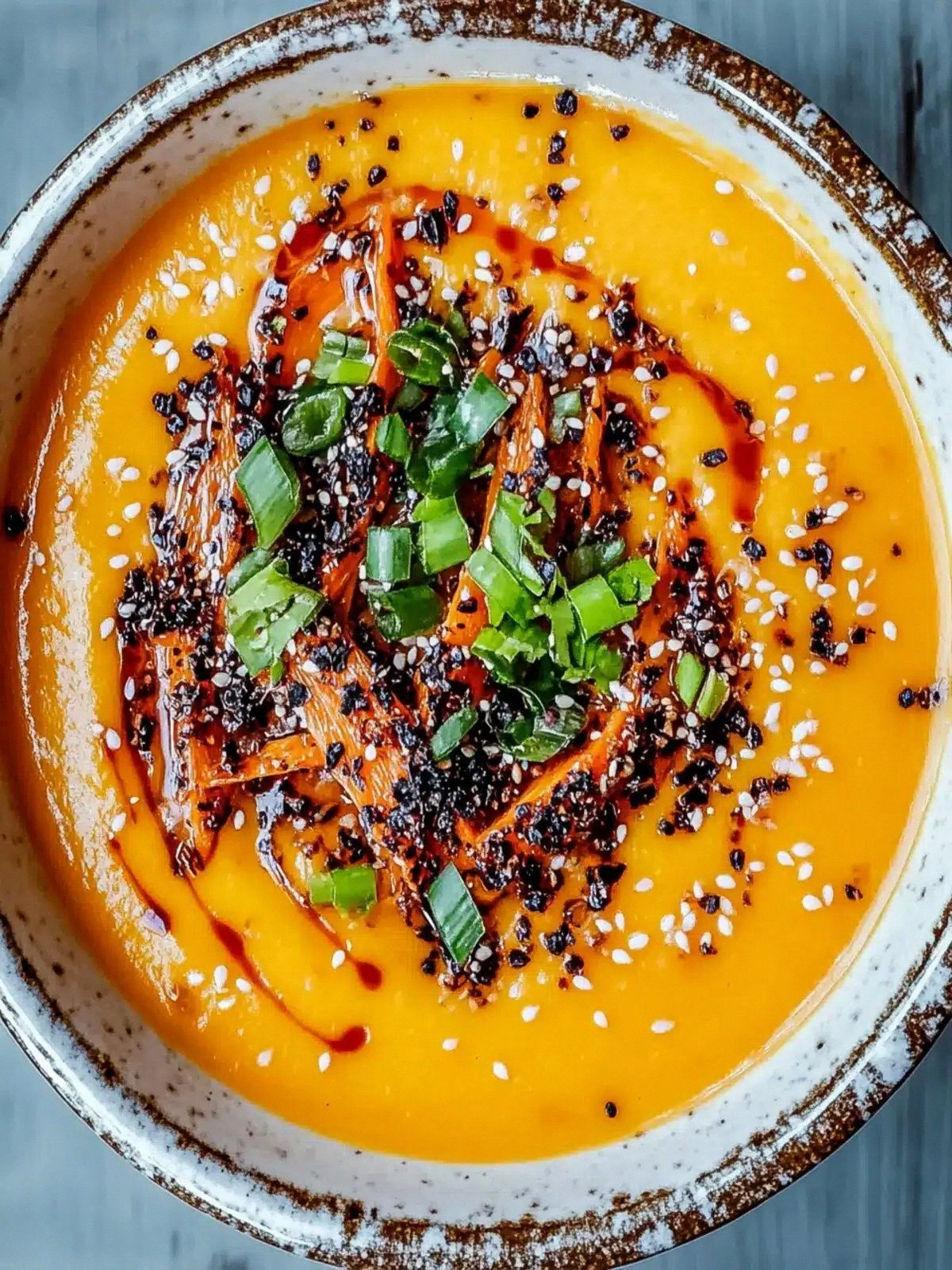
The Method — Step by Step
- Heat the olive oil in a large pot over medium heat. Add the diced onion and sauté until it turns translucent and just starts to brown, about 4–5 minutes. The smell should be sweet and slightly nutty, signaling that the base is ready to absorb the next flavors. This is the moment of truth—don’t rush it.
- Introduce the minced garlic and grated ginger. Stir constantly for 30 seconds until fragrant, watching for that subtle pop that indicates they’re not burnt. The kitchen will fill with an aromatic perfume that makes you want to dance in the kitchen.
- Add the carrot cubes, stirring to coat them in the onion mixture. Cook for 2 minutes, letting the carrots absorb the sautéed flavors. This quick sear locks in sweetness and prevents the carrots from becoming mushy later on.
- Pour in the vegetable broth and bring the mixture to a gentle boil. Reduce heat to a simmer, cover, and let it cook for 15 minutes. The carrots should be tender but still hold a slight bite. Keep an eye on the pot—once the liquid reduces slightly, the soup will thicken naturally.
- While the carrots are simmering, whisk the miso paste with a small amount of hot broth in a separate bowl to create a smooth slurry. This prevents clumps and ensures an even distribution of miso. Then stir the slurry back into the pot, mixing thoroughly.
- Stir in the coconut milk and sriracha, adjusting the heat to low. Let it simmer for another 5 minutes, allowing the flavors to meld. The broth should have a glossy sheen, and the sriracha should be evenly dispersed, giving a gentle heat that lingers.
- Taste the soup and add soy sauce if it needs a touch of saltiness. Remember, miso is already salty, so add soy sauce sparingly. This step is crucial; a well-balanced soup feels complete.
- Finish by stirring in chopped green onions and cilantro. The fresh herbs should add a burst of color and a bright, almost citrusy lift. Serve hot, spooning the soup into bowls and letting the steam swirl around your face.
That's it — you did it. But hold on, I've got a few more tricks that'll take this to another level...
Insider Tricks for Flawless Results
The Temperature Rule Nobody Follows
Keep the pot at a low simmer after adding coconut milk. High heat can cause the coconut to separate, leaving a gritty texture. A gentle simmer allows the flavors to marry without breaking the emulsion. I once tried a high‑heat method and ended up with a lumpy soup that tasted like it had been in a blender. Lesson learned: slow and steady wins the flavor race.
Why Your Nose Knows Best
Smell the soup before tasting. If the aroma is sweet, slightly nutty, and has a hint of umami, you’re on the right track. A bland scent often signals that the miso hasn't fully dissolved. Let it sit for a minute after stirring; the flavors will settle and intensify, giving you that instant “I know this is going to be amazing” moment.
The 5-Minute Rest That Changes Everything
After simmering, let the soup rest off the heat for 5 minutes. This brief pause allows the miso to fully integrate, giving the soup a silky, cohesive texture. When you reheat or serve, the soup will be thicker and richer, just like a well-aged wine.
The Perfect Garnish
A drizzle of toasted sesame oil just before serving adds a nutty aroma that elevates the dish. Sprinkle a few toasted pumpkin seeds for a crunchy contrast. I’ve found that the crunch breaks the silky mouthfeel, creating a delightful textural contrast.
The Sweet Spot for Sriracha
Start with 1 tablespoon of sriracha and taste. If you want more heat, add in ½ tablespoon increments. The key is to let the heat simmer into the soup so it becomes part of the flavor profile rather than a sharp aftertaste. Remember, the sriracha’s heat is mellowed by the coconut milk, making it a smooth, not fiery, experience.
Creative Twists and Variations
This recipe is a playground. Here are some of my favorite ways to switch things up:
Spicy Peanut Carrot Soup
Swap the sriracha for a spoonful of creamy peanut butter and add a dash of lime juice. The nutty base transforms the soup into a Thai-inspired delight that pairs perfectly with grilled tofu.
Roasted Carrot Miso Delight
Roast the carrots at 400°F for 25 minutes before adding them to the broth. The caramelized edges deepen the sweetness and give the soup a smoky undertone that’s surprisingly comforting.
Lemon‑Zest Variation
Add a teaspoon of lemon zest and a splash of lemon juice to brighten the dish. The citrus lift cuts through the coconut’s richness, creating a vibrant, refreshing soup.
Vegetable Medley Upgrade
Incorporate diced sweet potatoes and parsnips for added texture and natural sweetness. This makes the soup more filling and turns it into a hearty meal on its own.
Sautéed Kale Kick
Add a handful of chopped kale in the last 5 minutes of simmering. The kale’s earthy flavor complements the carrots, and the green adds a pop of color that’s Instagram‑worthy.
Ginger‑Lemongrass Twist
Replace the ginger with a stalk of lemongrass, bruised and sliced. The citrusy aroma gives the soup a bright, exotic flair that’s perfect for summer evenings.
Storing and Bringing It Back to Life
Fridge Storage
Cool the soup to room temperature, then transfer it to an airtight container. It will keep in the fridge for up to 4 days. The coconut milk may separate slightly; give it a quick stir before serving.
Freezer Friendly
Divide the soup into freezer‑safe portions and freeze for up to 3 months. When ready to reheat, thaw overnight in the fridge or use the defrost setting on your microwave.
Best Reheating Method
Reheat gently on the stove over low heat, adding a splash of water or broth to thin the soup if needed. This restores the silky texture and ensures the flavors blend smoothly. A quick stir at the end brings everything back to life.