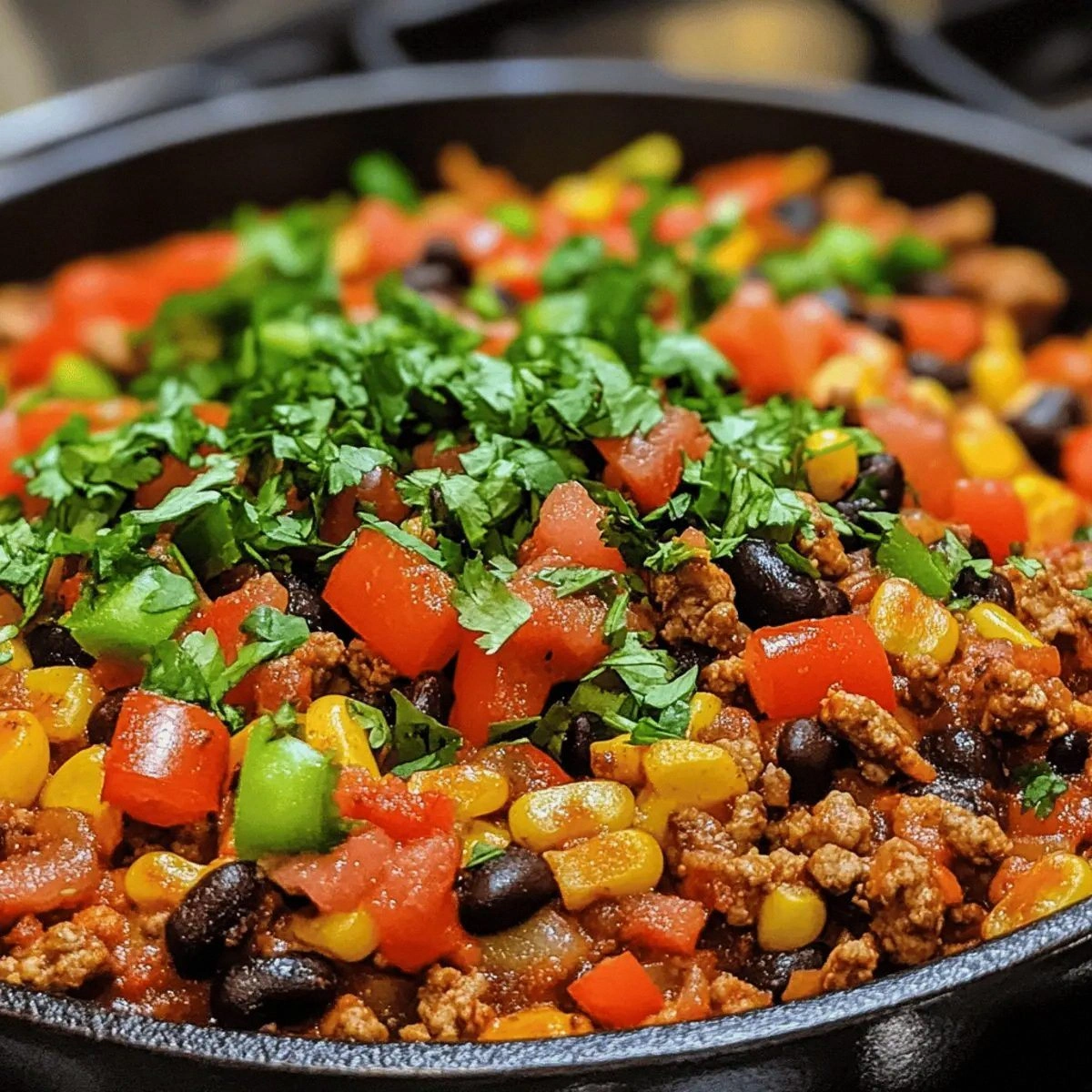
I was standing in front of my fridge, staring at a rainbow of bell peppers, a lonely red onion, and a stubborn can of black beans. I had a craving for tacos, but the last time I tried to make them, I ended up with a soggy mess that tasted like the kitchen floor. That night, I decided to rewrite the taco story, turning a simple skillet into a vibrant, one‑pot fiesta. I wanted something that would make my taste buds dance, my guests gasp, and my pantry feel proud. The result? An easy vegetarian taco skillet that’s as bold in flavor as it is in presentation.
Picture the aroma of sautéed peppers mingling with the earthy perfume of cumin and smoked paprika. Hear the sizzle as the onions release their caramelized sweetness, the sound that signals the skillet is ready to work its magic. Feel the heat of the pan as it transforms raw ingredients into a cohesive, savory symphony. Taste the burst of bright lime, the creamy hush of avocado, and the satisfying crunch of fresh corn. It’s a dish that doesn’t just fill a plate; it fills a room with a mouth‑watering promise.
What makes this version stand out is that it’s not just another taco recipe—it’s a confidence‑boosting, crowd‑pleasing, kitchen‑friendly masterpiece. I dared you to taste this and not go back for seconds, and the verdict is simple: you will. This skillet delivers a balance of textures—crispy edges that shatter like thin ice, tender peppers that melt in your mouth, and beans that cling to every bite. The flavors are layered, not muddled, thanks to a precise seasoning blend that hits the sweet spot between smoky and bright. And best of all, you get all of this with minimal prep time and a single pan to clean.
I’ll be honest—after the first batch, I ate half the skillet before anyone else even had a chance to grab a spoon. Most recipes get this completely wrong by overcooking the vegetables or under‑seasoning the beans. Here’s what actually works: a quick sear, a timed addition of liquids, and a final burst of lime and cilantro that lifts the whole dish. Picture yourself pulling this out of the skillet, the whole kitchen smelling incredible, and the table already buzzing with anticipation. Let me walk you through every single step—by the end, you’ll wonder how you ever made it any other way.
What Makes This Version Stand Out
- Flavor Profile: This skillet is a flavor roller coaster that starts with the sweet bite of bell peppers and ends with a citrusy finish. The spices are balanced so each bite feels intentional and satisfying.
- Texture: The contrast between the crisp peppers, tender beans, and creamy avocado creates a satisfying bite that keeps you coming back for more.
- Simplicity: All the work is done in one pan—no extra bowls or utensils. The result is a clean, streamlined cooking experience.
- Crowd Reaction: It’s the kind of dish that turns a quiet dinner into a spontaneous taco night. Guests will be asking for seconds.
- Ingredient Quality: Fresh, seasonal produce shines, making every bite feel like a garden in a skillet. The colors pop and the flavors sing.
- Cooking Method: The quick sear locks in flavors and keeps the veggies vibrant. This technique is the secret sauce to a great texture.
- Make‑ahead Potential: It reheats beautifully, so you can prep for the week and still enjoy a fresh taco experience. No loss of flavor or texture.
Alright, let's break down exactly what goes into this masterpiece...
Inside the Ingredient List
The Flavor Base
Bell peppers are the backbone of this dish, bringing a sweet, slightly earthy tone that pairs beautifully with the smoky spices. The red onion adds a subtle sharpness that cuts through the richness of the avocado. Garlic is the aromatic glue that ties everything together, releasing its pungent notes as it caramelizes. A blend of chili powder, cumin, and smoked paprika creates depth and warmth, ensuring each bite is a balanced explosion of flavor. Skipping any of these would leave the dish feeling flat and one‑dimensional.
The Texture Crew
Black beans contribute protein and a hearty bite that holds up against the fresh vegetables. Corn kernels add a sweet crunch that contrasts with the softness of the beans and peppers. Avocado brings a silky, buttery finish that balances the spices and keeps the skillet from feeling dry. Fresh cilantro provides a bright, herbal lift that cuts through the richness and adds a fresh finish. Each component is carefully chosen to create a harmonious mix of textures and flavors.
The Unexpected Star
Lime wedges are the secret weapon that ties everything together with a bright, acidic punch. When squeezed over the skillet, the lime’s citrusy notes awaken the spices and add a refreshing counterpoint to the savory elements. The acidity also helps to mellow the heat from the chili powder, making the dish approachable for all palates. A few extra lime wedges on the side give diners the option to dial up the zing to their liking.
The Final Flourish
Fresh cilantro and lime wedges are the finishing touches that elevate this dish from good to unforgettable. The cilantro adds a burst of green freshness that brightens the plate, while the lime’s citrusy brightness lifts the overall flavor profile. Together, they create a vibrant, aromatic finish that makes the dish feel fresh and lively. If you’re feeling adventurous, sprinkle a handful of toasted pepitas for an extra crunch.
Everything's prepped? Good. Let's get into the real action...
The Method — Step by Step
- Prep the Vegetables: Dice the bell peppers into bite‑size cubes, slice the red onion thin, and mince the garlic finely. The smaller the pieces, the faster they’ll cook and the more surface area for the spices to cling to. Keep everything ready in separate bowls so you can move swiftly from one step to the next. This step is critical for ensuring even cooking and maximum flavor absorption.
- Heat the Skillet: Place a large cast‑iron or heavy‑bottom skillet over medium‑high heat. Add a splash of olive oil or a neutral oil with a high smoke point. The oil should shimmer but not smoke. This creates a slick surface that prevents the veggies from sticking and promotes even caramelization.
- Sauté Onions and Garlic: Toss the sliced onion and minced garlic into the hot skillet. Cook until the onion becomes translucent and fragrant, about 3–4 minutes. Stir frequently to avoid burning the garlic. The aroma that fills the kitchen is the first hint that the dish is on the right track.
- Add Peppers: Stir in the diced bell peppers and cook until they start to soften and develop a slight char on the edges, about 5 minutes. The char adds a smoky depth that complements the spices. Keep the heat high enough to sear but low enough to prevent burning.
- Season: Sprinkle in the chili powder, ground cumin, smoked paprika, salt, and black pepper. Toss everything together so the spices coat the vegetables evenly. Stir for 30 seconds until the spices become fragrant. The sizzling sound is a sign that the spices are releasing their oils and aromas.Kitchen Hack: Toast the spices for 30 seconds before adding to intensify their flavor and reduce any raw edge.
- Add Beans and Corn: Stir in the drained and rinsed black beans and corn kernels. Mix well so everything is coated in the spice mixture. Cook for an additional 3–4 minutes, allowing the beans to heat through and the corn to develop a slight caramelization on the edges.
- Simmer: Reduce the heat to medium, cover the skillet, and let the mixture simmer for 5 minutes. This step melds the flavors together and ensures the beans are tender. Check occasionally to ensure the liquid doesn’t evaporate completely; add a splash of water or vegetable broth if needed.
- Finish with Freshness: Remove the lid, stir in chopped cilantro, squeeze the lime wedges over the skillet, and add sliced avocado. The avocado should be added last to keep its creamy texture intact. Gently fold the avocado in to avoid mashing it.Kitchen Hack: Slice the avocado just before serving to prevent browning.
- Watch Out: While adding avocado, be careful not to over‑scoop the avocado; you want chunky pieces, not a puree. A small knife or a gentle spoon will keep the avocado intact, maintaining the dish’s visual appeal and textural contrast. If you accidentally mash it, you can quickly stir in a splash of lime to re‑brighten the mixture.
- Serve: Plate the skillet directly onto a serving dish or individual bowls. Garnish with extra cilantro or lime wedges if desired. The dish is best enjoyed hot, straight from the skillet, where the steam carries the aromas to your senses. Pair with warm tortillas, rice, or a side of guacamole for a complete meal.
That's it — you did it. But hold on, I've got a few more tricks that'll take this to another level...
Insider Tricks for Flawless Results
The Temperature Rule Nobody Follows
Many cooks think a high heat is always better, but the truth is a medium‑high setting gives the vegetables time to caramelize without burning. The key is to keep the skillet hot enough to sizzle when the ingredients hit it, but not so hot that the garlic burns. If you’re using a cast‑iron pan, let it heat for a few extra minutes before adding oil.
Why Your Nose Knows Best
Before you even touch the skillet, sniff the aromatics. A faint, sweet smell from the onions signals they’re starting to caramelize. If you notice a sharp, raw scent from the garlic, reduce the heat immediately. Your nose is a reliable indicator of the right cooking moment.
The 5-Minute Rest That Changes Everything
After simmering, let the skillet rest uncovered for 5 minutes before serving. This allows the flavors to settle and the steam to redistribute, creating a more cohesive taste. The rest also gives the avocado a moment to settle into its creamy state without turning mushy.
Keep It Moist Without Overcooking
When adding beans, avoid pouring a full cup of liquid. Instead, use just enough to coat the beans and let the residual moisture from the vegetables do the rest. Over‑watering can turn the dish into a mush, which defeats the texture contrast.
Quick Heat‑Up Hack
If you’re reheating leftovers, use a splash of water or a small amount of vegetable broth. Sprinkle it over the skillet, cover, and heat on low for 3–4 minutes. The added moisture prevents the beans from drying out and keeps the avocado from turning brown.
Flavor Layering Secrets
Layering spices in stages enhances depth. Add the dry spices first, then the wet ingredients. This prevents the spices from becoming clumped and ensures each bite has a balanced flavor profile.
Creative Twists and Variations
This recipe is a playground. Here are some of my favorite ways to switch things up:
Protein Power
For a heartier option, add diced tofu or crumbled tempeh. Sauté them first until golden, then follow the standard recipe. The added protein makes it a complete meal that satisfies even the most ravenous appetites.
Mexican Street Taco
Swap the cilantro for a spoonful of salsa and sprinkle shredded cheese on top. The cheese melts into the skillet, adding a creamy, salty layer that feels like a street‑food taco in every bite.
Mediterranean Twist
Replace corn with chickpeas and add a pinch of oregano. The chickpeas add a nutty flavor, while oregano brings a subtle herbal note that gives the dish a Mediterranean vibe.
Sweet Heat
Dice a small amount of pineapple and toss it in with the peppers. The pineapple’s natural sweetness balances the heat from the chili powder, creating a sweet‑spicy fusion.
Breakfast Taco
Serve the skillet over scrambled eggs or a fluffy omelet. The eggs absorb the flavors, turning the dish into a breakfast favorite that’s both satisfying and energizing.
Gluten‑Free
Serve the skillet over a bed of rice or quinoa instead of tortillas. The grains add a subtle nuttiness and keep the dish gluten‑free without sacrificing flavor.
Storing and Bringing It Back to Life
Fridge Storage
Store leftovers in an airtight container for up to 3 days. Keep the avocado separate until ready to serve to prevent browning. The rest of the skillet can be cooled to room temperature before sealing.
Freezer Friendly
Freeze the skillet in a freezer‑safe container for up to 2 months. When reheating, thaw overnight in the refrigerator and then warm on the stovetop with a splash of water. The beans and corn will retain their texture if you reheat gently.
Best Reheating Method
Reheat on low heat, adding a splash of water or broth to keep the mixture moist. Stir frequently and cover until hot. Finish with a squeeze of fresh lime to restore brightness and a sprinkle of cilantro for freshness.