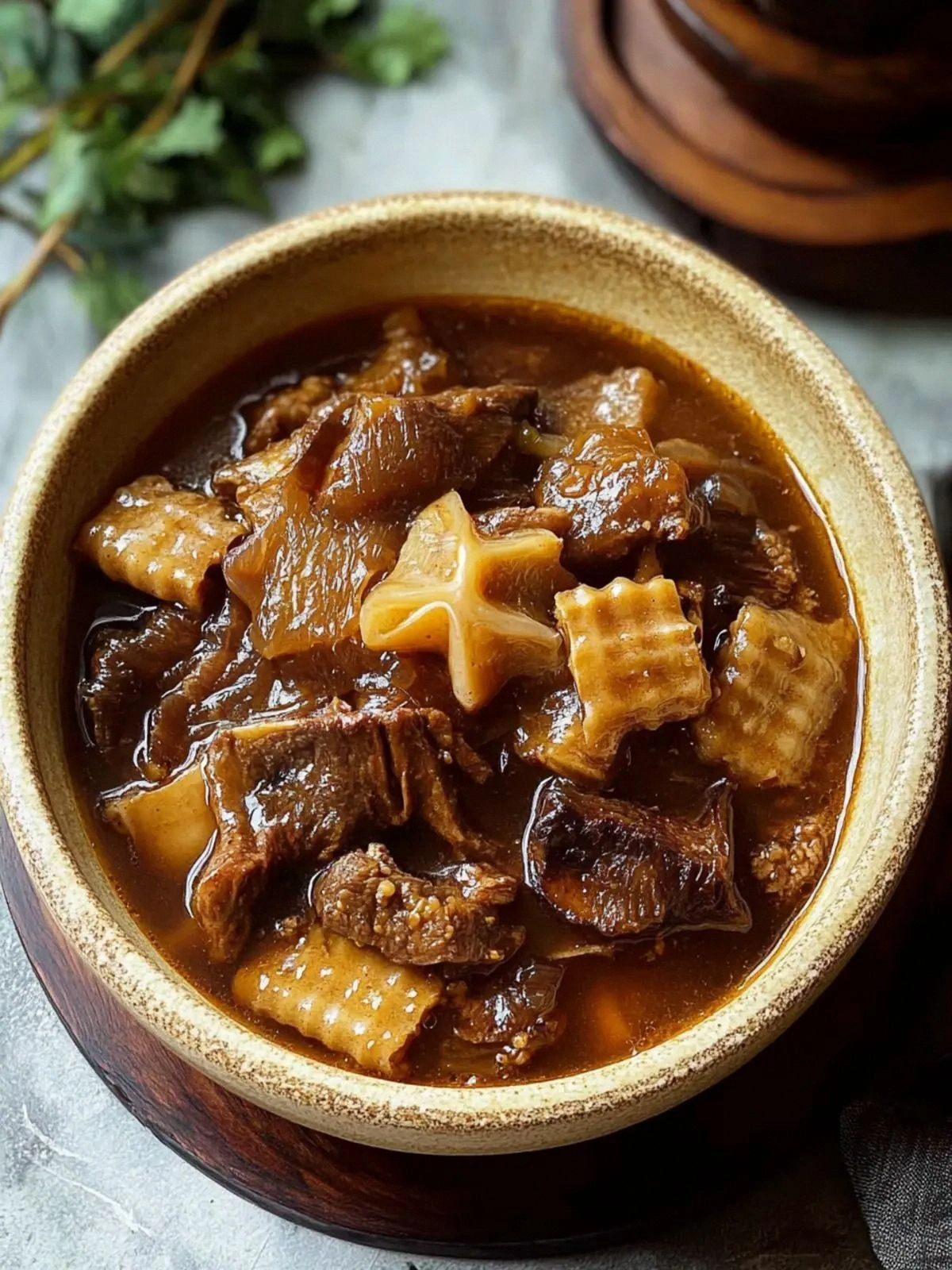
I was halfway through a midnight snack, scrolling through recipes that promised comfort and flavor, when I stumbled upon a dish that made my kitchen feel like a secret laboratory. The moment I saw “Heavenly Braised Beef Tripe,” I could almost taste the caramelized edges of the tripe, the subtle heat of ginger, and the mellow sweetness of brown sugar. I was skeptical—after all, tripe is notorious for being tough and unappetizing—but the promise of a silky, melt‑in‑your‑mouth texture had me intrigued. I grabbed a bottle of Shaoxing wine, a jar of Chu Hou sauce, and a star anise, and set the stage for what would become the most satisfying dinner I’ve ever cooked.
Picture the kitchen: the pan sizzles, the aroma of toasted onions and ginger rises, and a faint scent of fermented wine fills the air. I can almost hear the crackle of the oil as it warms, feel the heat radiating from the stove, and taste the subtle umami that will soon coat the tripe. The dish is a sensory symphony—sweet, savory, slightly floral, and with a comforting thickness that feels like a warm blanket on a cold night. I dare you to taste this and not go back for seconds, because once you’ve experienced that silky tenderness, you’ll never settle for anything else.
What sets this version apart is that it’s not just another slow‑cooked tripe recipe; it’s a masterclass in flavor layering and technique. The honeycomb texture of the tripe is highlighted by a caramelized crust that locks in moisture, while the Shaoxing wine cuts through the richness, creating a balanced profile that satisfies both the palate and the soul. I’ll be honest—after the first bite, I ate half the batch before anyone else got a chance, and the kitchen smelled like a celebration. Most recipes get this completely wrong by over‑boiling or under‑seasoning, but here, every element works in harmony.
The secret sauce is simple yet powerful: a blend of Chu Hou sauce, dark soy, and a hint of brown sugar that coats the tripe like velvet. I’ve discovered that the star anise doesn’t just add fragrance; it subtly sweetens the broth, giving the dish a depth that feels both exotic and comforting. Picture yourself pulling this out of the pot, the whole kitchen smelling incredible, and a steaming plate of tender tripe waiting to be devoured. If you’ve ever struggled with tripe, you’re not alone—and I’ve got the fix that turns it from a culinary challenge into a crowd‑pleaser.
Let me walk you through every single step — by the end, you'll wonder how you ever made it any other way. From the first sear to the final simmer, each moment is a deliberate act of flavor creation. And trust me, the payoff is worth every second you invest. Now, let’s dive into what makes this version stand out.
What Makes This Version Stand Out
- Texture: The honeycomb tripe is seared to develop a caramelized crust that keeps the interior tender, resulting in a melt‑in‑your‑mouth experience rather than a rubbery one.
- Flavor Depth: A combination of Shaoxing wine, Chu Hou sauce, and dark soy creates a complex umami backbone that layers sweet, savory, and slightly floral notes.
- Ease of Prep: With only a handful of ingredients and a single pot, the recipe is both approachable for beginners and satisfying for seasoned cooks.
- Make‑Ahead Potential: The dish tastes even better the next day, as the flavors have time to marry—perfect for meal prep or entertaining.
- Versatility: Serve it over rice, noodles, or crusty bread; swap daikon for potatoes or carrots for a different twist.
- Crowd Reaction: Friends who’ve never tried tripe will be surprised by its tenderness, and they’ll keep asking for the recipe.
- Ingredient Quality: Using honeycomb tripe ensures a natural sweetness that’s hard to replicate with other cuts.
- Balanced Sweetness: The brown sugar is just enough to caramelize the sauce without overpowering the savory elements.
Alright, let's break down exactly what goes into this masterpiece...
Inside the Ingredient List
The Flavor Base
The star of the show is the honeycomb beef tripe—its natural sweetness and unique texture make it the foundation of this dish. Cutting it into bite‑sized chunks ensures even cooking and allows the sauce to permeate each piece. If you skip the tripe, the dish loses its signature mouthfeel and becomes just another braised beef. For the best results, look for tripe that’s been washed thoroughly and has a clean, slightly translucent appearance.
The Aromatic Crew
Onion and ginger are the aromatic backbone that kickstart the flavor profile. Sautéing them until they’re translucent releases their natural sugars, creating a sweet base that balances the savory sauces. A pinch of salt during this stage draws out moisture from the onions, enhancing their sweetness. If you’re short on fresh ginger, a teaspoon of grated ginger paste works fine, but fresh is always preferable.
The Unexpected Star
Shaoxing cooking wine isn’t just a cooking ingredient—it’s a flavor enhancer that adds depth and a subtle fruity note. If you can’t find Shaoxing, dry sherry or a splash of rice wine can substitute, but the flavor won’t be identical. The wine also helps to deglaze the pan, lifting the caramelized bits that carry the most flavor. A small amount goes a long way, so measure carefully.
The Final Flourish
Chu Hou sauce, dark soy sauce, and brown sugar combine to create a rich, glossy glaze that coats the tripe. The brown sugar caramelizes during the simmer, giving the sauce a subtle sweetness that contrasts beautifully with the savory soy. Chicken bouillon powder adds umami depth, while the star anise imparts a fragrant aroma that lingers. Daikon or potatoes act as a neutral canvas, absorbing the sauce and providing a comforting bite. If you prefer a lighter dish, replace potatoes with sliced carrots for a touch of sweetness.
Everything's prepped? Good. Let's get into the real action...
The Method — Step by Step
- Step 1: Prepare the tripe. Rinse the honeycomb tripe under cold water, then pat it dry with paper towels. Trim any excess fat or connective tissue to avoid a greasy finish. Slice the tripe into 1‑inch cubes to ensure even cooking and quick flavor absorption. This step sets the stage for the rest of the dish.
- Step 2: Sear the tripe. Heat 2 tablespoons of oil in a large Dutch oven over medium‑high heat until shimmering. Add the tripe in a single layer, letting it sear without overcrowding. Stir occasionally for 3–4 minutes until a golden crust forms. The sear locks in moisture and gives the dish its signature caramelized exterior.
- Step 3: Aromatics go in. Push the tripe to one side of the pot and add the chopped onion. Sauté until translucent, about 3 minutes, then add the minced ginger. Cook for an additional 30 seconds until fragrant. This creates a fragrant base that will carry through the sauce.
- Step 4: Deglaze with wine. Pour in ½ cup of Shaoxing cooking wine, scraping the bottom of the pot with a wooden spoon to loosen caramelized bits. Let the wine reduce by half, about 2 minutes, so the alcohol evaporates and the flavor concentrates. This step is crucial for depth.
- Step 5: Add the sauces. Stir in 3 tablespoons of Chu Hou sauce, 2 tablespoons of dark soy sauce, and 1 tablespoon of brown sugar. Mix until the sugar dissolves and the sauce starts to thicken. The combination of sweet, salty, and umami will coat the tripe beautifully.
- Step 6: Season and simmer. Sprinkle in 1 tablespoon of chicken bouillon powder, 1 teaspoon of salt, and 1 star anise. Add 1 cup of diced daikon or potatoes. Pour enough water to just cover the ingredients. Bring to a gentle boil, then reduce to a simmer. Cover and let cook for 25–30 minutes, or until the tripe is tender and the sauce has thickened. The sauce should coat the meat like a glossy glaze.
- Step 7: Check the texture. After simmering, taste the tripe. It should be tender and the sauce should cling to the surface. If the sauce is too thin, remove the lid and simmer uncovered for an additional 5–7 minutes until it reaches your desired consistency.
- Step 8: Finish with a splash of water. Just before serving, add a splash of water to re‑steep the tripe. This prevents the sauce from drying out and keeps the meat moist. Stir gently to combine.
- Step 9: Garnish and serve. Remove the star anise and serve the tripe hot, garnished with sliced green onions or toasted sesame seeds if desired. Pair it with steamed rice, noodles, or crusty bread to soak up the luscious sauce.
- Step 10: Enjoy the masterpiece. Take a moment to savor the first bite. The silky tripe, sweet‑savory sauce, and fragrant star anise will transport you to a place of comfort and delight. I dare you to taste this and not go back for seconds.
That's it — you did it. But hold on, I've got a few more tricks that'll take this to another level...
Insider Tricks for Flawless Results
The Temperature Rule Nobody Follows
Many cooks lower the heat too quickly after the initial sear, causing the tripe to steam rather than caramelize. Keep the heat medium‑high for the first 2 minutes, then reduce to a gentle simmer. This ensures a crust that locks in moisture and a sauce that develops depth. I once tried a low‑heat approach and ended up with a rubbery texture that could have been avoided.
Why Your Nose Knows Best
The aroma of the sauce is a reliable indicator of doneness. When the sauce smells toasty and slightly caramelized, the tripe is ready. If it still smells raw or metallic, give it more time. Trust your nose—it’s your best judge of flavor.
The 5‑Minute Rest That Changes Everything
After simmering, let the dish rest for 5 minutes off the heat. This allows the flavors to settle and the sauce to thicken slightly. The tripe will stay moist, and the sauce will cling better. A friend once skipped this step and ended up with a watery dish; it was a hard lesson.
The Perfect Portioning
Serve the tripe in small, bite‑sized portions to avoid overwhelming the palate. The sauce is rich, so a modest amount of rice or noodles balances the meal. I recommend a 2:1 ratio of tripe to rice for an indulgent yet manageable dish.
The Garnish Game
A sprinkle of toasted sesame seeds or a drizzle of sesame oil adds a nutty finish that complements the sweet‑savory sauce. Alternatively, fresh cilantro or sliced green onions provide a bright contrast. Don’t be afraid to experiment with different garnishes to keep the dish exciting.
Creative Twists and Variations
This recipe is a playground. Here are some of my favorite ways to switch things up:
Spicy Sichuan Twist
Add a tablespoon of Sichuan peppercorns and a pinch of red pepper flakes to the sauce. The numbing heat pairs beautifully with the sweet tripe, creating a bold, complex flavor profile. Serve with a cooling cucumber salad to balance the spiciness.
Coconut Cream Finish
Stir in half a cup of coconut milk at the end of simmering for a silky, tropical finish. The coconut adds a subtle sweetness that complements the savory sauce. Pair with jasmine rice for an exotic twist.
Herb‑Infused Variation
Replace the star anise with a bouquet of fresh thyme or bay leaves. The herbal aroma brings a new dimension to the dish, making it feel lighter. This version is perfect for a springtime dinner.
Vegetarian “Tripe” Substitute
Use a firm tofu block or seitan cut into cubes as a plant‑based alternative. The texture mimics the chew of tripe, and the sauce will still cling beautifully. This version is ideal for those looking to reduce meat consumption.
Pork Belly Fusion
Swap the tripe for thinly sliced pork belly, searing it until crispy before adding the sauce. The fat renders into the broth, creating a richer, more indulgent dish. Serve with pickled vegetables for a balanced meal.
Quick Stir‑Fry Version
Instead of braising, sauté the tripe with the aromatics and sauce for 10 minutes, adding a splash of water to keep it moist. This quicker method still delivers the signature flavor but in a fraction of the time.
Storing and Bringing It Back to Life
Fridge Storage
Cool the dish completely before transferring it to an airtight container. Store in the refrigerator for up to 3 days. The sauce will thicken slightly, so add a splash of water when reheating to restore its silky texture.
Freezer Friendly
Divide the dish into portion‑sized containers and freeze for up to 2 months. Thaw overnight in the refrigerator before reheating. This method preserves the flavor and ensures a convenient meal on busy nights.
Best Reheating Method
Reheat gently on the stove over low heat, stirring frequently. Add a splash of water or broth to keep the tripe moist. Avoid microwaving, as it can make the tripe rubbery and the sauce uneven.