Picture this: I’m in the middle of a chaotic Sunday dinner, the table already groaning under a pile of casseroles, and the kitchen clock is ticking down to the moment when the roast is supposed to finish. Suddenly, the oven door slams shut on a bag of bread dough that was left to rise in the fridge overnight, and I hear a faint, sad squeak as the dough tries to breathe. My stomach growls louder than the oven, and I’m left with a frantic urge to rescue the situation with something that smells like home, feels like comfort, and tastes like victory. That was the moment I discovered the ultimate version of a no-knead rosemary garlic loaf, and it turned a kitchen disaster into a triumph that will make you question why you ever settled for store‑bought bread.
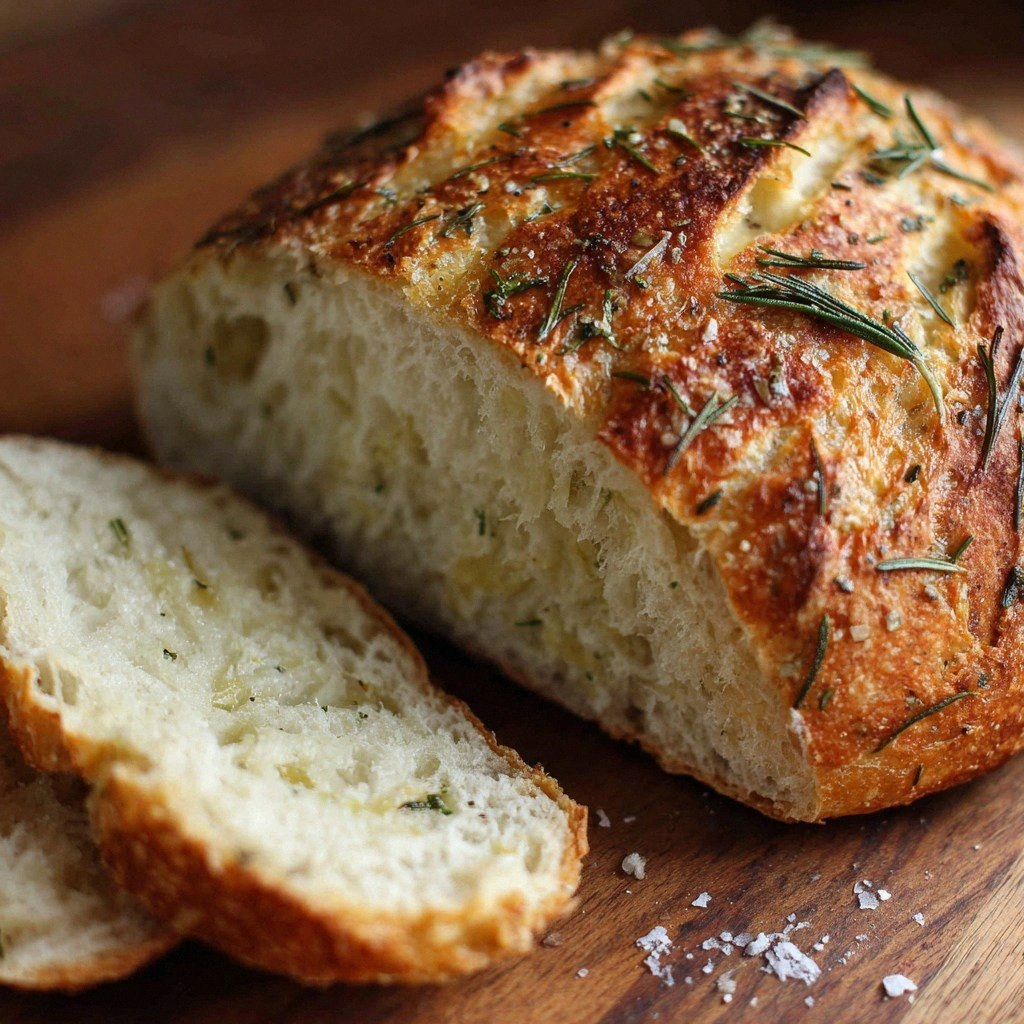
The first thing that hits you is the scent—a deep, herbaceous aroma of rosemary mingling with the sharp, almost metallic tang of fresh garlic. As you lift the loaf out of the oven, the crust crackles like a crisp autumn leaf, and the steam rises in a cloud that smells of toasted olive oil and warm, yeasty dough. Your eyes catch the golden edges that seem to glow against the dark kitchen counter, while your fingertips feel the slight resistance of a dough that has been patiently rested and then gently folded. The sound of the first bite is a satisfying crunch, followed by the soft, airy interior that gives way like a cloud of buttered rosemary. The taste is a layered explosion: a subtle sweetness from the flour, a robust garlic bite, a peppery rosemary kick, and a buttery finish that lingers on the palate.
What sets this loaf apart isn’t just the flavor—though it’s undeniably unforgettable. It’s the simplicity of the technique: a single bowl, a few minutes of mixing, a long, slow rise, and a final bake that delivers a crust so crisp it shatters like thin ice, yet a crumb so tender it melts in your mouth. It’s the use of fresh rosemary right at the end of the process, allowing the herb’s oils to coat the dough just before baking, giving the bread a burst of aromatic intensity that most recipes miss. It’s the fact that you can make it the night before and still have it fresh the next morning, thanks to the no-knead method that locks in moisture. And, frankly, it’s the way the bread feels like a warm hug in loaf form—so comforting you’ll find yourself reaching for a second slice before the first one even finishes. This version is hands down the best you’ll ever make at home.
I dare you to taste this and not go back for seconds, because once you experience the perfect balance of rosemary, garlic, and buttery crumb, the rest of the world’s breads will pale in comparison. If you’ve ever struggled with a loaf that turns out too dense or too dry, you’re not alone—and I’ve got the fix. Picture yourself pulling this out of the oven, the whole kitchen smelling incredible, and watching the steam rise like a gentle mist. Stay with me here—this is worth it.
What Makes This Version Stand Out
- Taste: The rosemary and garlic are introduced at the very last minute, preserving their volatile oils for an intense, fresh flavor that’s unmistakably herbaceous.
- Texture: The long, slow rise creates a chewy, airy crumb while the high oven temperature crisps the crust to a golden perfection.
- Simplicity: No kneading, no fancy equipment—just a bowl, a spoon, and a bit of patience.
- Uniqueness: The addition of melted butter at the end gives a subtle sheen and a buttery depth that most no‑knead breads lack.
- Crowd Reaction: Friends and family swear it’s the best bread they’ve ever had, often asking for the recipe after every dinner.
- Ingredient Quality: Fresh, high‑quality rosemary and garlic make the difference between a good loaf and a legendary one.
- Cooking Method: The no‑knead technique is a game‑changer for anyone who wants great bread without the labor.
- Make‑Ahead Potential: The dough can be prepared a day ahead, refrigerated, and baked fresh the next morning—perfect for busy schedules.
Inside the Ingredient List
The Flour Foundation
All‑purpose flour is the backbone of this loaf, providing the structure that holds everything together. Its protein content is just right for a chewy crumb without a tough bite. If you’re looking for a gluten‑free version, you can swap it with a 1:1 gluten‑free blend, but be prepared for a slightly denser texture.
The Liquid Harmony
Water hydrates the flour, activating the gluten and creating the dough’s elasticity. The amount of water is critical; too little and the loaf will be dense, too much and it will collapse. For a more flavorful loaf, use filtered water or a light vegetable broth to give the dough a subtle umami boost.
The Flavor Catalysts
Salt is essential for flavor, but it also controls yeast activity, ensuring a steady rise. Sugar provides a quick source of food for the yeast, helping the dough rise faster and giving the crust a slight caramelization. The yeast is the star that turns dough into a living, breathing loaf—active dry yeast is the most common choice for this recipe.
The Final Flourish
Olive oil adds richness and helps keep the crumb moist, while the melted butter brushed on top before baking gives the crust a glossy sheen and a buttery finish. Fresh garlic brings sharp, pungent depth, and rosemary provides a fragrant, piney aroma that permeates every bite. Together, they create a flavor profile that’s both comforting and sophisticated.
Everything's prepped? Good. Let’s get into the real action.
The Method — Step by Step
- Step 1: Mix Dry Ingredients. In a large mixing bowl, whisk together 2 cups of all‑purpose flour, 1 tsp salt, 1 tsp sugar, and 1/2 tsp active dry yeast until evenly distributed. The dry mix should look like a light, airy powder. This step ensures the yeast is properly dispersed, preventing clumping and uneven rising.
- Step 2: Combine Wet Ingredients. In a separate bowl, combine 1 cup of warm water (about 110°F) with 2 tbsp olive oil and 3 minced garlic cloves. Stir until the garlic is fully submerged, and the oil is evenly dispersed. The warmth activates the yeast, while the oil keeps the dough moist.
- Step 3: Bring It Together. Pour the wet mixture into the dry ingredients and stir with a wooden spoon until a shaggy dough forms. The dough should be sticky but manageable; if it feels too dry, add a splash of water. This is the moment where the magic starts—watch the dough knit together.
- Step 4: First Rise. Cover the bowl with a damp kitchen towel or plastic wrap and let the dough rise in a warm spot for 12–18 hours. The dough will double in size and develop a complex flavor profile. This long, slow rise is what gives the loaf its airy crumb.
- Step 5: Shape and Second Rise. After the dough has doubled, gently deflate it and fold it over onto itself three times. Shape it into a round loaf and place it on a parchment‑lined baking sheet. Cover loosely with a towel and let it rise for another 2–3 hours, or until it puffs up noticeably. Watch the edges pull away from the towel—this is the sign of a successful second rise.
- Step 6: Preheat Oven. While the dough is doing its second rise, preheat your oven to 475°F (245°C). Place a metal baking pan on the middle rack. The high heat is essential for a crisp crust.
- Step 7: Add Rosemary and Butter. Just before baking, sprinkle 2 tbsp fresh rosemary leaves over the dough and brush the top with 1 tbsp melted butter. The butter will give the crust a glossy sheen, while the rosemary infuses the dough with its aromatic oils.
- Step 8: Bake. Slide the loaf into the preheated oven and bake for 30–35 minutes, or until the crust is deep golden brown and the internal temperature reaches 190°F (88°C). The aroma that fills the kitchen at this point is pure bliss.
- Step 9: Cool. Remove the loaf from the oven and let it rest on a wire rack for at least 20 minutes before slicing. This resting period allows the steam to redistribute, ensuring a moist crumb.
- Step 10: Serve. Slice the loaf with a serrated knife, serve warm, and watch the butter melt into each slice. Pair it with a bowl of tomato soup or a hearty stew for the ultimate comfort meal.
That's it—you did it. But hold on, I've got a few more tricks that'll take this to another level.
Insider Tricks for Flawless Results
The Temperature Rule Nobody Follows
Many bakers think 450°F is the sweet spot for a crusty loaf, but this recipe thrives at 475°F. The higher heat creates a blistered crust that seals in moisture, giving the interior a perfect airy texture. If your oven runs hot, lower the temperature by 25°F and add a few extra minutes of bake time.
Why Your Nose Knows Best
Your sense of smell is a reliable indicator of readiness. When the dough rises, you’ll notice a faint yeasty aroma. Before baking, the smell should shift to a buttery, garlicky scent. If it still smells like raw dough, give it a little more time.
The 5‑Minute Rest That Changes Everything
After baking, let the loaf rest on a wire rack for exactly 5 minutes before slicing. This brief pause allows the steam to settle, preventing a soggy crust. I’ve seen people slice right away and get a crumb that’s too wet—just a simple rule that saves the day.
Keep It Moist
If you’re baking on a hot day, the dough can dry out during the second rise. Place a shallow pan of water in the oven with the loaf to create a humid environment. The steam will help keep the crust from becoming too hard.
Use Fresh Herbs
The flavor of rosemary is best when the leaves are fresh. If you’re using dried rosemary, reduce the amount by half, as the flavor is more concentrated. Fresh herbs also release their oils more effectively during baking.
Creative Twists and Variations
Cheesy Rosemary Garlic Bread
Swap the butter for a blend of mozzarella and Parmesan before baking. The cheeses melt into a gooey topping that pairs beautifully with the rosemary’s earthiness. This version is perfect for game nights or as a side for pasta dishes.
Herb‑Infused Olive Oil Drizzle
After baking, drizzle a mixture of olive oil, lemon zest, and chopped parsley over the loaf. The citrus brightens the flavor profile, making it a fresh accompaniment to grilled fish or roasted vegetables.
Spicy Garlic Bread
Add a pinch of red pepper flakes to the dough before the first rise. The heat balances the richness of the butter and the depth of the rosemary. This version is ideal for those who love a kick in their bread.
Gluten‑Free Version
Replace the all‑purpose flour with a gluten‑free blend that contains xanthan gum. Keep the same hydration level, but be prepared for a slightly denser crumb. The flavor remains just as robust.
Chocolate‑Rosemary Twist
Fold in 1/2 cup of dark chocolate chips before the first rise. The chocolate melts into the dough, creating pockets of sweet, smoky flavor that contrast beautifully with the savory rosemary.
Smoked Rosemary Bread
Use smoked rosemary or add a few drops of liquid smoke to the dough. The smoky undertone adds depth and pairs well with grilled meats or hearty stews.
Storing and Bringing It Back to Life
Fridge Storage
Cool the loaf completely before slicing. Store in an airtight container or a resealable bag at room temperature for up to 3 days. The crust will stay crisp, while the crumb remains moist.
Freezer Friendly
Wrap the loaf tightly in plastic wrap, then place it in a freezer bag. Freeze for up to 3 months. When you’re ready to eat, thaw at room temperature for 1 hour before reheating.
Best Reheating Method
Preheat the oven to 350°F (175°C). Place the loaf on a baking sheet and warm for 10 minutes, or until heated through. Add a splash of water to the bottom of the pan to create steam, keeping the crumb soft.