Introduction
Picture this: a quiet Sunday afternoon, the kitchen lights dim, and the only sound is the gentle hiss of a pan. I was rummaging through the fridge, eyes flicking over a lone bag of smoked gouda and a crisp Granny Smith that had been sitting there since last week. I had a craving that felt like a dare from my taste buds—an indulgent, buttery sandwich that would make the whole house stop and stare. I pulled the cheese out, sliced the apple, and decided to give the classic grilled cheese a smoky, fruity twist.
As soon as the first slice hit the skillet, the aroma of butter melting and apples caramelizing filled the room. The sizzle sounded like applause, a promise of golden edges that crackle like tiny fireworks. I could already taste the gooey melt of the gouda mingling with the tartness of the apple, a flavor duet that would make even the most seasoned sandwich lover swoon. If you’ve ever burned a grilled cheese or settled for bland, this version is the antidote to those culinary mishaps.
What sets this recipe apart is the intentional layering of textures and flavors. The smoked gouda brings a deep, savory richness that cuts through the sweetness of the apple, while the buttery crust offers a satisfying crunch that echoes in every bite. The method is simple, yet each step is engineered to coax out maximum flavor. I dare you to taste this and not go back for seconds—trust me, your taste buds will demand an encore.
And there’s a twist you won’t expect: a splash of apple cider vinegar during the buttering stage that brightens the entire sandwich, giving it a subtle tang that keeps the flavors from becoming cloyingly sweet. Stay with me, because by the end of this post, you’ll wonder how you ever made a grilled cheese any other way.
What Makes This Version Stand Out
- Flavor Depth: The smoky gouda layers a savory undertone that balances the apple’s natural sweetness, creating a complex profile that feels both comforting and adventurous.
- Crisp Texture: Buttered bread toasted to a golden amber gives a crunch that contrasts with the melt‑in‑your‑mouth cheese, while the apple adds a subtle snap.
- Easy Prep: No fancy equipment required—just a skillet, a spatula, and a few minutes of attention. It’s a recipe that fits into a busy weeknight or a leisurely brunch.
- Versatility: Swap out the cheese for provolone or cheddar, or use a different apple variety. The base concept remains the same, making it a playground for experimentation.
- Crowd‑pleaser: Whether you’re feeding a group or just yourself, the combination of sweet and savory is guaranteed to win over guests.
- Ingredient Quality: Using high‑quality smoked gouda and fresh apples elevates the dish beyond the ordinary grilled cheese.
- Make‑Ahead Potential: Assemble the sandwiches ahead of time and keep them in the fridge; they’ll reheat beautifully and stay crisp.
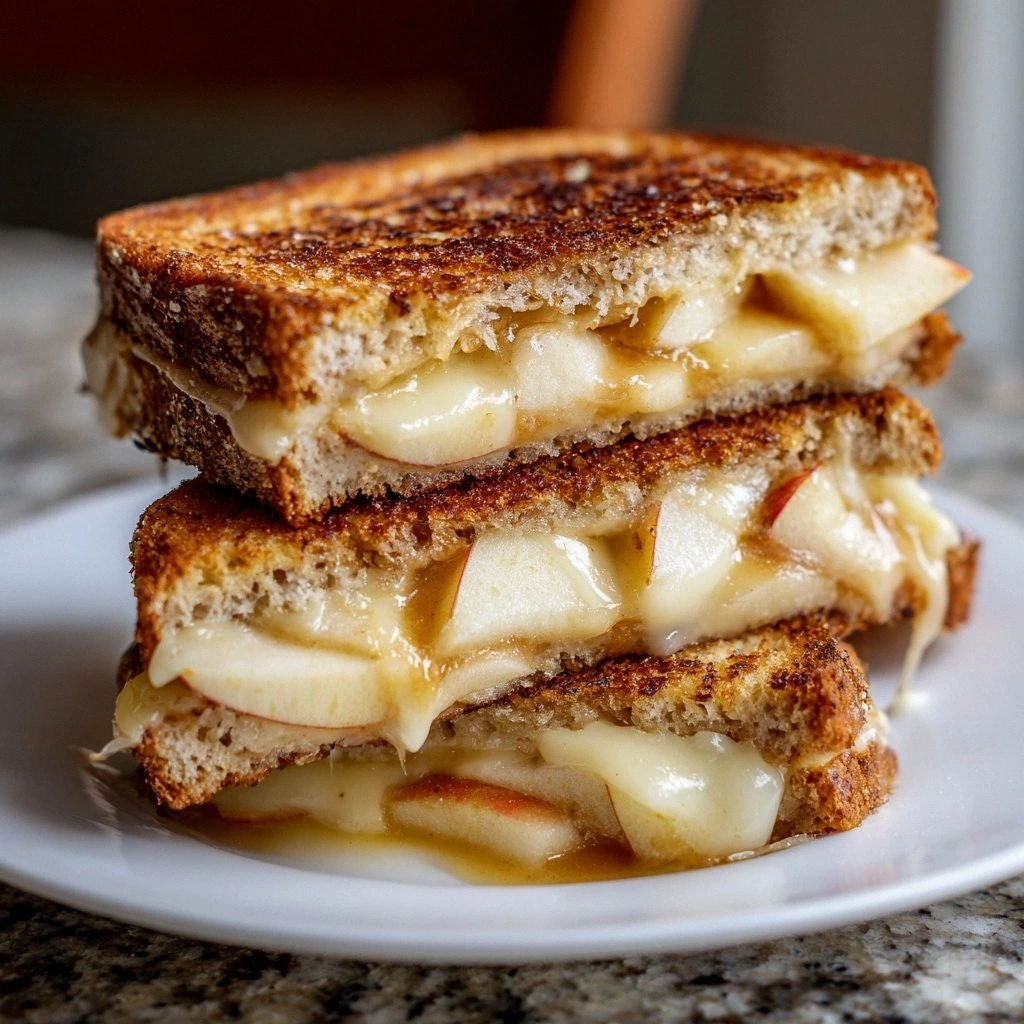
- Visual Appeal: The golden crust, melted cheese, and caramelized apple slices create a plate that looks as good as it tastes.
Alright, let’s break down exactly what goes into this masterpiece…
Inside the Ingredient List
The Flavor Base
Bread: The backbone of any grilled cheese, the bread determines the overall mouthfeel. I recommend a sturdy sourdough or a rustic rye for added chew; each type brings its own unique flavor and texture. If you use white bread, the sandwich will feel lighter, but the contrast between the bread and the gooey cheese will be less pronounced. Don’t skip the bread—every bite relies on its structure.
The Texture Crew
Butter: Butter is the secret weapon that creates the crisp, golden crust. It also carries the flavors of the cheese and apple into the bread. A tablespoon per side of bread is enough to achieve that buttery shine without overpowering the other ingredients. If you’re watching calories, try a light spread of olive oil, but the classic butter remains unbeatable.
The Unexpected Star
Apple: Fresh apples—Granny Smith or Honeycrisp—add a delightful crunch and a burst of natural sweetness that complements the smoky gouda. Thinly sliced, they balance the savory cheese perfectly. If you prefer a sweeter sandwich, choose a Fuji or Gala; if you like a tangier bite, stick with Granny Smith. Skipping the apple turns the dish into a plain grilled cheese, losing that sweet‑savory dance.
The Final Flourish
Smoked Gouda Cheese: This creamy cheese adds a rich, smoky flavor that pairs beautifully with the sweetness of apples. It melts wonderfully, creating that gooey goodness we all crave. Use thick slices—about 1/4 inch—to ensure even melting and a generous cheese-to-bread ratio. If you’re craving a more intense smoke, look for gouda labeled “extra smoked.” Skipping the cheese would leave the sandwich bland and devoid of that luxurious melt.
Everything’s prepped? Good. Let’s get into the real action…
The Method — Step by Step
- Prep the Apples: Slice two medium apples into thin, uniform rings—about 1/8 inch thick. Toss them in a bowl with a splash of apple cider vinegar to prevent browning and to add a subtle tang. Let them sit while you move on to the next step; the vinegar will also help caramelize them slightly during cooking.
- Butter the Bread: Spread a generous layer of butter—about a tablespoon—on one side of each bread slice. The butter should coat the surface evenly, creating a barrier that prevents the bread from becoming soggy when the cheese melts.
- Assemble the Sandwiches: Place a slice of smoked gouda on the unbuttered side of one bread slice. Layer the apple rings over the cheese, then top with another slice of cheese. Cover with the second bread slice, buttered side facing out. Press lightly to keep everything together. Kitchen Hack: Use a butter knife to spread a thin layer of honey on the unbuttered side before adding the cheese for a hint of sweetness that complements the apple.
- Heat the Skillet: Place a cast‑iron skillet over medium heat and let it preheat for 2–3 minutes. A properly heated pan ensures an even, golden crust. Test the heat by flicking a few drops of water onto the surface; they should dance and evaporate instantly.
- Cook the First Side: Place the assembled sandwich buttered side down onto the skillet. Cook for 3–4 minutes, or until the bread turns a deep golden brown. The cheese should start to ooze slightly, and you’ll hear a satisfying sizzle. Watch Out: Keep the heat moderate; if the pan is too hot, the bread will burn before the cheese melts.
- Flip the Sandwich: Carefully flip the sandwich using a spatula. The second side should also turn golden brown after 3–4 minutes. The apple rings will begin to caramelize, turning a caramel color and releasing sweet aromas.
- Finish with a Press: Press down gently with the spatula to ensure even contact between the bread and the skillet. This step guarantees a crisp exterior and a fully melted interior.
- Rest and Slice: Remove the sandwich from the skillet and let it rest for 1 minute. This pause allows the cheese to set slightly, preventing a molten mess when you cut into it. Slice diagonally, revealing the molten center and caramelized apple rings.
- Serve Immediately: Plate the sandwich and serve hot. Pair it with a crisp salad or a bowl of tomato soup for a comforting meal. The combination of smoky, sweet, and buttery flavors will have your guests asking for the recipe right away.
That’s it— you did it. But hold on, I've got a few more tricks that'll take this to another level…
Insider Tricks for Flawless Results
The Temperature Rule Nobody Follows
Most people cook grilled cheese on high heat, which often results in a burnt exterior and a cold interior. I swear by a medium‑low temperature, roughly 300°F (150°C). This slower cooking allows the cheese to melt evenly while the bread browns beautifully. If you’re using a non‑stick pan, add a splash of water to keep the surface from drying out.
Why Your Nose Knows Best
Smell the sandwich as it cooks. The first aroma that emerges is the butter’s toasty scent; the second is the apple’s sweet, slightly tart fragrance. When you hear the cheese start to bubble, it’s time to flip. Trust your nose—if it’s calling for a flip, it’s because the cheese is at the right stage of melting.
The 5‑Minute Rest That Changes Everything
After you remove the sandwich from the skillet, let it rest for five minutes on a cutting board. The rest allows the cheese to set, making it easier to slice cleanly. I’ve seen friends try cutting immediately, only to have a gooey mess spill everywhere. Give it that short pause and you’ll have a perfect bite every time.
Keep the Crust Crispy Even After Reheating
If you’re reheating leftovers, place the sandwich on a baking sheet and warm it in a 350°F (175°C) oven for 5 minutes. The oven’s dry heat will revive the crust’s crunch without overcooking the interior. A quick dip in a skillet for 30 seconds can also bring back the golden edges.
Make It Gluten‑Free
Use a gluten‑free bread that has a good structure, like a hearty whole‑grain or a sourdough‑style. The key is to ensure the bread has enough moisture and protein to hold the cheese and apple without crumbling. If you’re using a low‑protein gluten‑free mix, add a tablespoon of xanthan gum to strengthen the crumb.
Creative Twists and Variations
This recipe is a playground. Here are some of my favorite ways to switch things up:
Cheesy Caramelized Onion Version
Swap the apple for thinly sliced caramelized onions. The sweetness of the onions pairs with the gouda, and the onions add a deeper umami flavor that’s perfect for a winter brunch.
Spicy Jalapeño & Gouda
Add a few thin slices of fresh jalapeño between the cheese and apple. The heat will contrast beautifully with the smoky cheese, giving the sandwich an unexpected kick.
Nutty Almond Butter Spread
Replace the butter with almond butter for a nutty, nut‑butter flavor that complements the apple’s sweetness. The almond butter also adds a subtle crunch when it melts.
Herbed Tomato & Gouda
Layer thin tomato slices and fresh basil leaves between the cheese and apple. The acidity of the tomato will cut through the richness, while the basil adds a fragrant finish.
Breakfast‑Style Bacon & Gouda
Add a couple of crispy bacon strips on top of the cheese before placing the second bread slice. The salty crunch of bacon elevates the sandwich into a hearty breakfast staple.
Vegan Version
Use a plant‑based smoked gouda alternative and vegan butter. The flavor profile remains the same, but you can enjoy it with a side of roasted veggies.
Storing and Bringing It Back to Life
Fridge Storage
Store assembled sandwiches in an airtight container for up to 24 hours. Wrap each sandwich in parchment paper before sealing to keep the bread from drying out. When you’re ready to eat, reheat in a skillet over medium heat until the cheese is melted and the bread is crisp.
Freezer Friendly
Wrap sandwiches individually in foil and place them in a freezer bag. They’ll keep for up to 2 months. To reheat, thaw overnight in the fridge or microwave for 1–2 minutes, then finish in a skillet for a crisp crust.
Best Reheating Method
Place the sandwich on a baking sheet and bake at 350°F (175°C) for 5–7 minutes, or until the cheese is melted and the bread is golden. Add a tiny splash of water to the pan before reheating if the sandwich feels dry; the steam will restore moisture without making the bread soggy.