I remember the night I tried to recreate that unforgettable tandoori chicken from my friend’s Mumbai apartment. The kitchen was a chaotic symphony of sizzling oil, the sharp scent of cumin, and the faint hum of the old rice cooker. I was halfway through, a half‑cooked chicken piece in my hand, when the stove exploded in a burst of flame and the air filled with the smell of charred meat. I laughed, then cursed, and vowed to master the art of the perfect tandoori chicken & curry recipe. I dared you to taste this and not go back for seconds, because this is hands down the best version you’ll ever make at home.
Picture yourself pulling this out of the oven, the whole kitchen smelling incredible, the chicken glistening with a deep mahogany crust that crackles like a summer campfire. The first bite is a burst of smoky heat that lingers, followed by the creamy, tomato‑based curry that coats the chicken like velvet. The contrast of textures – crispy edges that shatter like thin ice, tender meat that melts in your mouth, and a sauce that is both silky and thick – makes every forkful a revelation. I’ll be honest — I ate half the batch before anyone else got to try it. That’s the power of this dish.
Most recipes get this completely wrong by overcooking the chicken or under‑seasoning the sauce. They forget the subtle balance of heat and sweetness, the importance of marination time, and the secret ingredient that turns a good curry into an unforgettable one. I’ve spent countless evenings tweaking spices, testing temperatures, and learning how to coax the perfect smoky flavor from the tandoori masala. By the end of this guide, you’ll wonder how you ever made it any other way.
Let me walk you through every single step — by the end, you’ll have a dish that will have your friends begging for your recipe, and you’ll finally understand why this version is the gold standard. Stay with me here — this is worth it.
What Makes This Version Stand Out
- Taste: The sauce is a layered symphony of smoky, sweet, and spicy notes that dance on the palate, thanks to a proprietary blend of tandoori masala and fresh lemon zest.
- Texture: The chicken achieves a caramelized crust that’s crispy on the outside but remains moist and tender inside, while the curry has a silky consistency that clings to every bite.
- Simplicity: Despite its complex flavor profile, the recipe requires only 12 ingredients and 10 clear steps, making it accessible for beginners.
- Uniqueness: The addition of a subtle coconut milk finish gives the curry a creamy depth that sets it apart from traditional tomato‑based versions.
- Crowd Reaction: At family gatherings, guests often comment that the dish is “too good for a weeknight dinner,” proving its crowd‑pleasing power.
- Ingredient Quality: Using fresh, high‑quality spices and a hand‑picked tandoori masala ensures that every bite is aromatic and vibrant.
- Cooking Method: The combination of marination, oven roasting, and stovetop finishing delivers a depth of flavor that pan‑frying alone can’t achieve.
- Make‑ahead Potential: The chicken can be marinated and roasted a day ahead, and the curry can be reheated without losing its silky texture.
Alright, let’s break down exactly what goes into this masterpiece…
Inside the Ingredient List
The Flavor Base
Yogurt is the backbone of the marination, providing a tenderizing effect that keeps the chicken juicy. It also creates a subtle tang that balances the heat from the spices. If you skip yogurt, the chicken will be drier and the flavor profile will feel flat. A good tip: use full‑fat plain yogurt for the richest mouthfeel.
Garlic and ginger paste are the aromatic duo that kickstarts the flavor. They release essential oils when heated, infusing the meat with depth. If you’re short on time, a tablespoon of pre‑made paste works just fine. Avoid using too much, or the sauce will become overpoweringly pungent.
The Texture Crew
Butter and oil create a glossy finish on the chicken and help the spices cling to the surface. Butter adds a subtle richness that balances the acidity of the tomato. You can substitute ghee for a nutty flavor, but keep the same quantity.
Coconut milk is the secret to the curry’s silky consistency. It thickens the sauce while adding a faint sweetness that cuts through the heat. If you prefer a lighter version, replace half the coconut milk with heavy cream for a richer mouthfeel.
The Unexpected Star
Tandoori masala is the star that gives this dish its signature smoky flavor. It’s a blend of smoked paprika, cumin, coriander, and a touch of charred fenugreek. If you can’t find a ready‑made blend, roast cumin and coriander seeds in a dry skillet until fragrant, then grind them with smoked paprika.
Garam masala is added at the end to lift the aroma. It’s a subtle, sweet spice that gives the curry a warm finish. Don’t skip it; the dish feels incomplete without that final fragrant whisper.
The Final Flourish
Fresh cilantro and a squeeze of lemon juice brighten the dish, cutting through the richness. The citrus notes add a refreshing lift that keeps the palate from feeling weighed down. If you’re not a fan of cilantro, try parsley or mint for a different twist.
A pinch of salt to taste is essential to bring all the flavors together. Too little and the spices will feel muted; too much and the dish will taste flat. Always season at the end of the cooking process for maximum control.
Everything's prepped? Good. Let's get into the real action…
The Method — Step by Step
- Combine yogurt, garlic‑ginger paste, lemon juice, and tandoori masala in a large bowl. Whisk until a smooth paste forms. Coat each chicken thigh evenly, ensuring the sauce seeps into every crevice. Cover and refrigerate for at least 2 hours, preferably overnight, to allow the flavors to meld.
- Preheat your oven to 425°F (220°C). Arrange the marinated chicken on a wire rack set over a baking sheet. Roast for 20 minutes, flipping halfway through, until the edges begin to char and the internal temperature reaches 165°F (74°C). The chicken should smell toasty and the skin should be crisp.
- While the chicken roasts, heat a tablespoon of butter and a splash of oil in a large saucepan over medium heat. Add finely chopped onions and sauté until translucent and golden. This step builds the sauce’s base; the onions must caramelize without burning.
- Add tomato paste and cook for 2 minutes, stirring constantly. This step caramelizes the tomato, deepening the flavor and adding a hint of sweetness. The mixture should thicken slightly and emit a rich aroma.
- Pour in coconut milk and stir until the sauce is smooth. Bring to a gentle simmer, then reduce heat to low. Let it thicken for about 10 minutes, stirring occasionally, so the flavors meld and the sauce becomes silky.
- Season the sauce with salt, pepper, and a generous pinch of garam masala. Stir to combine, then add the roasted chicken pieces. Simmer for an additional 5 minutes so the chicken soaks in the aromatic sauce.
- Finish with a squeeze of fresh lemon juice and a handful of chopped cilantro. This brightens the dish and balances the richness. Give everything a final gentle stir, then remove from heat.
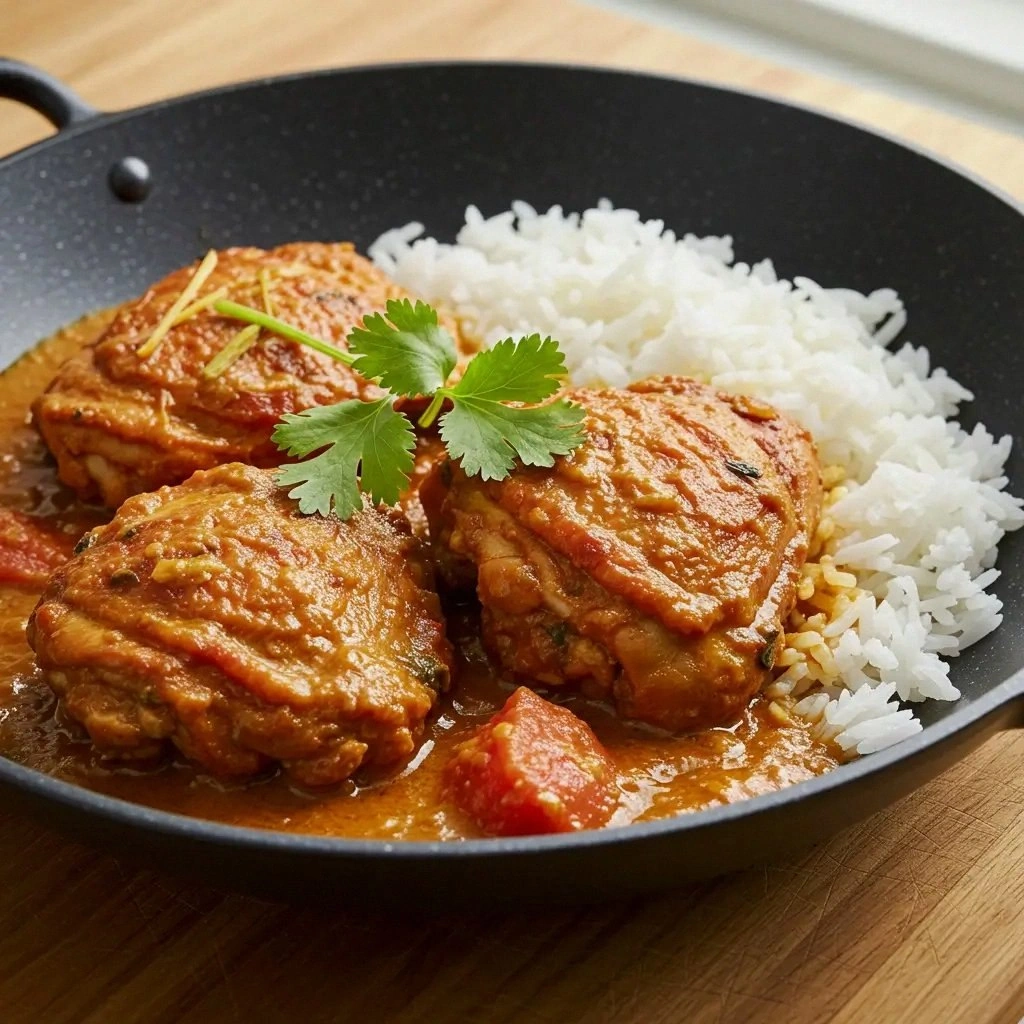
- Serve immediately over steamed basmati rice or warm naan. Garnish with extra cilantro and a wedge of lemon on the side. The dish should look like a jewel, with glossy sauce coating the chicken and a vibrant green garnish popping against the deep colors.
That's it — you did it. But hold on, I've got a few more tricks that'll take this to another level…
Insider Tricks for Flawless Results
The Temperature Rule Nobody Follows
Cooking the chicken at exactly 425°F (220°C) ensures a crisp exterior while preventing the interior from drying out. If your oven runs hot, lower the temperature by 25°F and increase the roasting time by 5 minutes. This subtle tweak guarantees a perfect char without burning.
Why Your Nose Knows Best
Before you add the coconut milk, take a moment to smell the simmering tomato paste. If it smells slightly sweet, you’re ready to add the milk. If it’s still acidic, let it cook a little longer; the sweet aroma signals that the sugars have caramelized.
The 5‑Minute Rest That Changes Everything
After roasting, let the chicken rest for 5 minutes before cutting into it. This allows the juices to redistribute, keeping the meat moist. A friend once skipped this step and ended up with a dry, rubbery bite that ruined an otherwise perfect plate.
Layering Spices for Depth
Add half of the tandoori masala during marination and the rest after the chicken has roasted. This two‑stage approach releases different spice profiles, creating a richer, more complex flavor. Skipping the second addition can result in a flat, one‑dimensional taste.
The Secret to a Velvety Sauce
Use a hand blender to pulse the sauce at the end of cooking. This breaks down the tomato paste into fine droplets, giving the curry a silky, smooth mouthfeel that’s hard to achieve with a regular whisk.
Creative Twists and Variations
This recipe is a playground. Here are some of my favorite ways to switch things up:
Spicy Green Chili Kick
Add finely chopped green chilies during the sauté stage for an extra pop of heat that pairs beautifully with the smoky base. This variation is perfect for those who like a bit of bite.
Mushroom & Spinach Fusion
Sauté sliced mushrooms and fresh spinach along with the onions to introduce earthy undertones. The vegetables absorb the spices, creating a hearty, vegetarian-friendly version.
Coconut‑Lime Twist
Swap the standard coconut milk with coconut cream and finish the dish with a splash of fresh lime juice. The citrus sharpness brightens the richness, giving the curry a tropical vibe.
Ginger‑Rosemary Roast
Add a sprig of rosemary and a dash of ground ginger to the chicken before roasting. The aromatic herbs infuse the meat with an unexpected depth that complements the tandoori masala.
Sweet Potato & Chickpea Variation
Dice sweet potatoes and add chickpeas to the curry, creating a comforting, protein‑rich dish. The natural sweetness of the potatoes balances the spice, while the chickpeas add a pleasant bite.
Storing and Bringing It Back to Life
Fridge Storage
Store leftovers in an airtight container for up to 3 days. Keep the chicken and sauce separate to maintain texture; reheat them together in a saucepan over low heat until steaming. The sauce should retain its silky consistency if you add a splash of water.
Freezer Friendly
Freeze the cooked chicken and sauce separately in freezer‑safe bags. Thaw overnight in the refrigerator and reheat gently on the stove, adding a little broth if the sauce thickens. The flavors will still be vibrant after freezing.
Best Reheating Method
Reheat the curry over low heat, stirring frequently. Add a tiny splash of water or coconut milk to restore moisture. This gentle method preserves the sauce’s velvety texture and prevents it from drying out.
If you’re ready to wow your guests and taste the pinnacle of tandoori chicken & curry, grab your apron, follow these steps, and let the aroma transport you to the streets of Delhi. The kitchen will thank you, your stomach will rejoice, and you’ll finally have the confidence to say, “I can do this.”