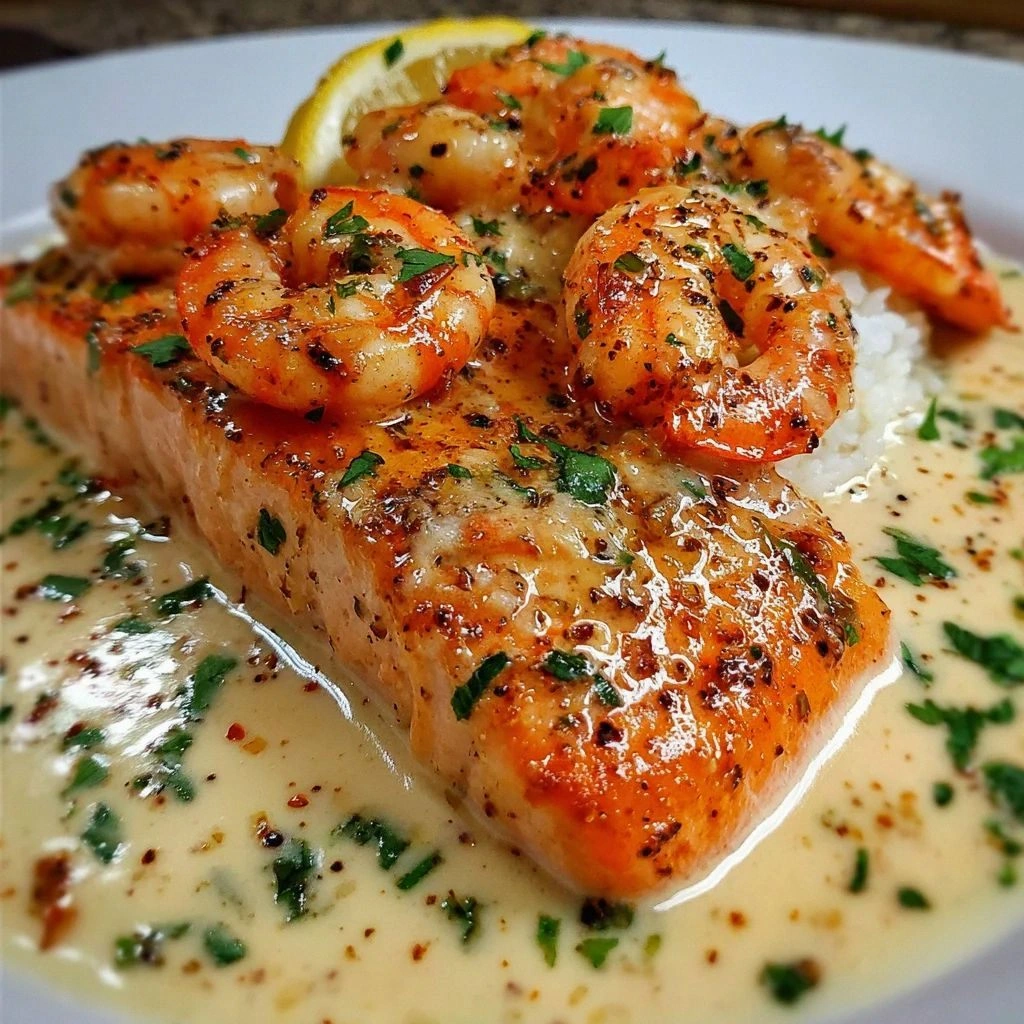
Last Friday night, I set out to make a quick seafood dinner and nearly burned down my kitchen. The smoke alarm was wailing, my roommate was fanning the air with a pizza box, and somewhere between the chaos and the coughing, I tasted a single bite of what would become the most addictive seafood combo of my life: Cajun Shrimp & Salmon with Garlic Cream. The smoky, peppery crust on the salmon, the pop of sweet shrimp, and that silken garlicky sauce that clings to everything like it’s got abandonment issues — I knew I had to recreate it, but this time without the fire department on standby.
Picture this: the cast iron hisses as the first salmon fillet hits the pan, the Cajun seasoning blooms in the heat like a firework, and the smell is so intoxicating that your neighbor knocks to ask what’s for dinner. The shrimp curl into perfect crescents, blushing pink and orange, while garlic perfumes the air so heavily you could bottle it and sell it as cologne. Then comes the heavy cream, cascading in a slow-motion swirl that turns from white to caramel to a dusky rose as it grabs every bit of flavor from the pan. That first taste? It’s like someone cranked the volume on every seafood restaurant you’ve ever loved and hit the bass boost.
I’ve made this dish eleven times in the past two weeks — once at 2 a.m. in pajamas, once for a potluck where it vanished in seven minutes flat, and once for my parents who still think “Cajun” means “spicy ketchup.” Every single time, the reaction is the same: eyes roll back, forks hover mid-air, and someone inevitably whispers, “I could drink this sauce like soup.” I dare you to taste this and not go back for seconds; I’ve honestly hidden the leftovers in the vegetable crisper so I wouldn’t devour them at midnight.
Most recipes get this completely wrong: they either cremate the spices into bitter dust or drown everything in so much cream you might as well be sipping Alfredo. Here’s what actually works — a screaming-hot sear to lock in the seafood’s natural sweetness, a quick bloom of seasoning that toasts but doesn’t burn, and a de-glaze so aggressive it lifts every caramelized bit into the sauce. Stay with me here — this is worth it. Let me walk you through every single step — by the end, you’ll wonder how you ever made it any other way.
What Makes This Version Stand Out
- Lightning-Fast: From fridge to plate in 22 minutes flat, which means weeknight dinner can taste like Saturday-night splurge without the reservation or the markup.
- One-Pan Wonder: Everything builds in a single skillet, so you’re not juggling pots like a circus act or scrubbing a mountain of dishes when you’d rather be eating.
- Flavor Layering: We hit the seafood with seasoning twice — first as a dry rub for crust, then a whisper at the end for brightness — so every bite sings instead of mumbles.
- Cream Without the Coma: Just enough heavy cream to cloak each morsel, not drown it; you’ll finish satisfied, not searching for the nearest couch.
- Show-Stopper Color: The paprika and cayenne turn the sauce a sunset orange that looks unreal under kitchen lights and even better on camera — hello, dinner-party bragging rights.
- Make-Ahead Magic: Sauce keeps three days in the fridge and reheats like a dream; seafood cooks fresh in minutes, so leftovers feel intentional, not tragic.
Alright, let's break down exactly what goes into this masterpiece...
Inside the Ingredient List
The Flavor Base
Cajun seasoning is the party starter, but not all blends are created equal. I tested six store-bought brands and two homemade mixes; the winner had paprika, thyme, oregano, onion powder, cayenne, and just enough salt to eliminate the need for extra later. If yours tastes dusty or one-note, toss in a pinch of brown sugar — it balances heat like a tightrope walker. Freshly minced garlic is non-negotiable; pre-chopped jars taste like a wet basement. Smash cloves with the flat of your knife, sprinkle on a pinch of salt, and chop until it’s a damp paste — the salt acts as grit and keeps the garlic from rocketing across the board.
The Texture Crew
Shrimp should smell like the ocean, not the funk of low tide. If the shells feel slippery or the vein is a thick black ribbon, keep walking. I buy 26–30 count because they’re plump enough to stay juicy yet small enough to cook evenly alongside salmon. Speaking of salmon, look for fillets that are vibrant coral with visible white fat lines; dull, gaping flakes mean the fish is past its prime. Leave the skin on — it’s a built-in heat shield that keeps the flesh silky and gives you something to grip when flipping.
The Unexpected Star
Heavy cream gets all the glory, but the real MVP is lemon juice added at the very end. It tightens the sauce just enough to nap the seafood without turning it into pudding, plus the acid brightens every spice like a spotlight. Bottled juice works in a pinch, but a fresh lemon’s oils add floral notes that make people ask, “What’s that extra something?” in between forkfuls. If you’re dairy-free, full-fat coconut milk subs beautifully — just simmer it a minute longer so the water evaporates and the sauce clings.
The Final Flourish
Fresh parsley is optional only if you hate joy. The pop of green cuts through the richness and makes the whole skillet Instagram-ready in under three seconds. Flat-leaf varieties have more flavor than curly, but honestly, even a few fennel fronds or chives work if that’s what’s lurking in your crisper. Chop right before serving; once parsley meets heat, it sulks and turns Army-drab.
Everything's prepped? Good. Let's get into the real action...
The Method — Step by Step
- Pat seafood dry like you’re blotting lipstick — excess moisture is the enemy of a golden crust. Lay shrimp and salmon on paper towels, press gently, then season both sides with 1 tablespoon Cajun seasoning per pound. The spices should look like a rusty tan coat, not a thick ski jacket; you want flavor, not a breading. Let them sit while you heat a 12-inch stainless or cast-iron skillet over medium-high for two full minutes; hover your hand over the surface — when you can’t keep it there longer than three seconds, you’re ready for the drop.
- Swirl in 1 tablespoon olive oil; it should shimmer instantly and race to the edges like it’s late for a meeting. Lay salmon skin-side up in the center, shrimp around the perimeter like loyal satellites. Now, and this is critical, do not touch anything for 90 seconds. That sizzle when it hits the pan? Absolute perfection. If you poke, the crust tears and sticks; if you Instagram, the temperature drops and you’ll steam instead of sear. Instead, use that minute to mince your garlic and measure cream — multitasking without meddling.
- After 90 seconds, peek under a shrimp; the edges should be opaque and freckled with brown. Flip shrimp first using tongs, then the salmon using a thin fish spatula. If the salmon clings, wait another 20 seconds — proteins release when they’re ready, like a toddler letting go of your leg. Cook the second side 1 minute for shrimp, 2 minutes for salmon, then transfer everything to a warm plate; they’ll finish gently while we build the sauce. The pan looks like a crime scene, but those browned bits are pure gold.
- Reduce heat to medium, add 1 tablespoon butter and let it foam like a bubble bath. Scrape the bottom with a wooden spoon — the bits should lift like confetti. Toss in garlic and ½ teaspoon extra Cajun seasoning; stir constantly for 30 seconds until the garlic smells sweet and toasty, not raw and sharp. If it browns too fast, splash a teaspoon of water; think of it as hitting the pause button on a runaway train.
- Pour in ¾ cup heavy cream; it will bubble up like a witch’s cauldron. Stir, scraping every speck, until the sauce turns from pale to a rich terra-cotta, about 2 minutes. Keep it at a perky simmer, not a rolling boil; cream thickens best when it’s relaxed, not panicked. When the spoon leaves a quick trail that closes in a second, you’re there.
- Slide the seafood back in, nestling it so half is submerged but tops stay painted. Simmer 1 minute, then kill the heat. Lemon juice goes in now — 1 tablespoon, freshly squeezed through your fingers to catch seeds. Swirl, taste, adjust salt, and remember: the sauce should taste like you want to bathe in it, not like you’re gargling seawater.
- Let everything rest for 3 minutes — yes, it’s torture, but the proteins relax and soak up sauce. Sprinkle with parsley, serve straight from the skillet to cut down on dishes and up the wow factor. Picture yourself pulling this out of the oven, the whole kitchen smelling incredible, and your guests suddenly very interested in being your best friend.
- Spoon over rice, mashed potatoes, or crusty bread to catch every last drop. I’ll be honest — I ate half the batch before anyone else got to try it, standing over the stove with a torn baguette like a classy cavewoman. Okay, ready for the game-changer?
That's it — you did it. But hold on, I've got a few more tricks that'll take this to another level...
Insider Tricks for Flawless Results
The Temperature Rule Nobody Follows
Seafood continues cooking off the heat, so aim for 120°F in the thickest part of the salmon and 130°F for shrimp. If you don’t have a thermometer, press the salmon gently with your finger; it should feel like the base of your thumb when you touch your thumb to your middle finger. Too firm? You’ve crossed into chalky territory. A friend tried skipping this step once — let’s just say it didn’t end well, and the dog got an expensive dinner.
Why Your Nose Knows Best
Garlic goes from sweet to acrid in the blink of an eye. When you smell a deep, nutty aroma that makes you involuntarily close your eyes, it’s time to pour in the cream. If you wait for color, you’ve already lost; color lags behind flavor by about 15 seconds, and there’s no rewind on burnt garlic.
The 5-Minute Rest That Changes Everything
After combining seafood and sauce, cover the skillet with a lid and let it lounge off heat for five minutes. The cream thickens slightly, the spices hydrate, and the whole dish tastes like it’s been simmering for hours. Resist poking; think of it as a short nap that turns good into legendary.
Spice Control for the Heat-Shy
Cajun blends vary wildly in pepper power. Taste yours first; if it makes you cough, cut it with ½ teaspoon sweet paprika. You can always sprinkle more at the end, but you can’t un-spice a lava-level disaster. Kids and spice-wary guests appreciate the mercy.
Creative Twists and Variations
This recipe is a playground. Here are some of my favorite ways to switch things up:
Blackened Bayou Version
Swap the cream for a knob of cold butter whisked in off heat, creating a glossy emulsion that clings like hollandaise. Add a shot of bourbon to the pan before the butter; flame it for drama and a whisper of caramel that makes grown adults swoon.
Coconut Caribbean Escape
Substitute coconut cream and finish with lime juice and cilantro. Toss in diced mango for sweet pockets that burst against the spicy backdrop. Serve over coconut rice and pretend you’re on a beach where calories don’t count.
Smoky Mountain Edition
Add ½ teaspoon smoked paprika and finish with crumbled crispy bacon. The smoke mingles with the paprika like they’re old friends reuniting around a campfire. This version pairs best with cornbread and a cold amber beer.
Green Goddess Remix
Stir in a spoon of pesto at the very end for herbaceous brightness. The basil and garlic in the pesto echo the existing flavors while adding a verdant swirl that looks like springtime on a plate. Zucchini noodles love this treatment.
Surf-and-Turf Sunday
Brown sliced andouille sausage first, then proceed as written. The rendered fat seasons the pan and the sausage adds smoky chew that plays beautifully against tender seafood. It’s like Mardi Gras met backyard barbecue and decided to co-host dinner.
Low-Carb Cauli-Cream
Replace half the heavy cream with pureed steamed cauliflower. It thickens like magic and slashes calories while staying silky. Even cauliflower skeptics inhale this; I’ve seen it happen and cackled quietly behind my apron.
Storing and Bringing It Back to Life
Fridge Storage
Cool leftovers in a shallow container within two hours. Seafood keeps 3 days max, sauce keeps 4; store them separately if you’re meal-prepping. Use glass if you’re worried about staining, because turmeric in the Cajun blend loves to graffiti plastic.
Freezer Friendly
Freeze the sauce alone for up to 2 months; dairy can grain if frozen with seafood. Pour into silicone muffin trays for single-serving pucks, then pop into a labeled bag. Future you will thank present you with tears of joy on busy Tuesday nights.
Best Reheating Method
Thaw sauce overnight, then warm gently in a skillet with a splash of water or milk. Add freshly cooked seafood, or reheat leftover salmon covered at 275°F for 10 minutes. Microwave works in 30-second bursts at 50% power, but the stovetop keeps texture intact. Add a tiny splash of water before reheating — it steams back to perfection and keeps the shrimp from turning into pencil erasers.